
The Manly Series 2 of 5: Building a different story about men and masculinity.
If we want men to see a role for themselves in prevention, we need to be clear about what needs to change. But we also need to make different ways of being a man feel visible, possible, and worth moving towards.
When we started This is Manly, we weren't trying to come up with a new definition of what it meant to be a man. In fact, we were trying to do almost the opposite.
We were interested in what happened when we made the definition bigger.
In our early work with young people, we heard about the pressures and expectations that came with masculinity: how men should look, how they should behave, what they should care about, what they should be good at, and what they should keep to themselves.
Some young men were already questioning these expectations and finding their own ways of doing things differently. Others were much more invested in defending them. And sometimes, those different perspectives existed in the same room.
That became an important starting point for This is Manly: not replacing one narrow definition of masculinity with another, but creating more room for men to decide what masculinity could mean for them.
If we're asking men to change, what are we asking them to move towards?
One of our early ideation workshops with a class of high-school students brought the complexity of this into sharp focus.
We'd hoped to explore different ideas about masculinity. Instead, we encountered strong resistance. Some students defended male violence and disrespect towards women, repeated ideas familiar from online manosphere and incel communities, and pushed back against criticism of male influencers and men in their families.
It was confronting, but important to our learning. Some attitudes we were challenging were connected to people the students admired, relationships they valued and ideas they used to make sense of the world.
It made us think more carefully about what we're asking when we invite young men to question traditional masculinity. We might also be asking them to question someone they admire, recognise harm in a valued relationship or let go of beliefs that have offered certainty.
None of this means avoiding difficult conversations. Violence against women doesn't occur in isolation from the culture around it. The attitudes and behaviours we normalise, including rigid gender stereotypes, inequality and cultures of disrespect, help create the conditions in which violence is more likely to occur. Prevention must challenge those conditions, including harmful expressions of masculinity. But how we create space for people to question familiar beliefs and imagine something different matters too.
There's a tension in trying to define what a better version of masculinity looks like, sometimes described as the 'empty set problem'. Qualities we might associate with positive masculinity, such as kindness, courage, care and responsibility, aren't uniquely masculine. Yet trying to identify qualities that are distinctly masculine risks reinforcing the very stereotypes we're trying to challenge.
Rather than replacing one set of rules with another, we became interested in broadening what masculinity could mean.
As we explored in Blog 1, motivation is an important condition for behaviour change. Knowing something is harmful can give us a reason to move away from it, but motivation can also come from having something meaningful to move towards. The stories surrounding masculinity help shape what men understand to be normal, valued, and possible.
We started by playing with "manly."
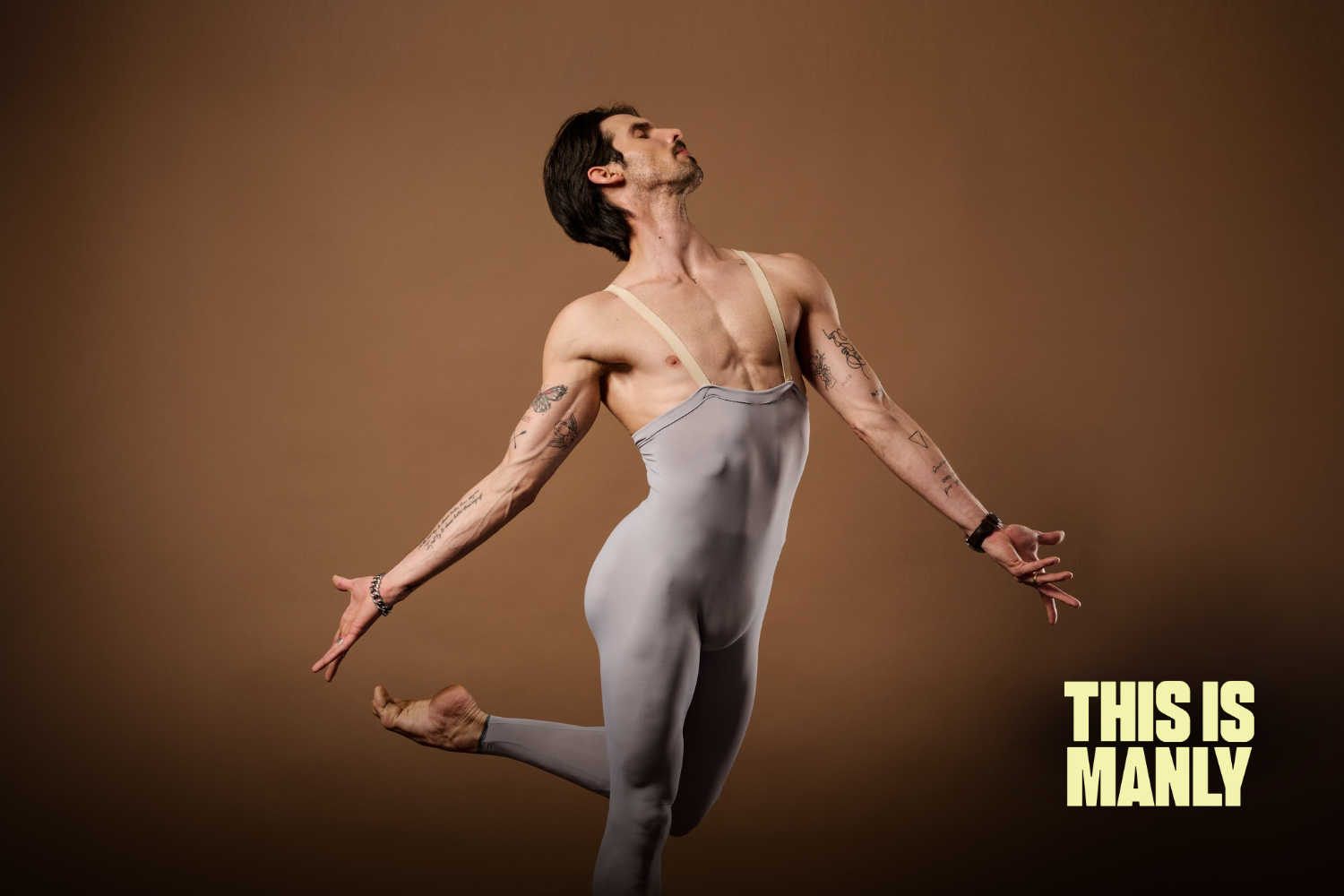
Even the name ‘This is Manly’ was an experiment in narrative. Rather than rejecting the idea of being manly, we wanted to play with it.
Our first campaign was co-designed with young people and used humour, familiar language, imagery and cultural references to open up conversations about masculinity. Instead of prescribing what being 'manly' should mean, we showed a broader range of behaviours, interests and relationships and said: this can be manly too.
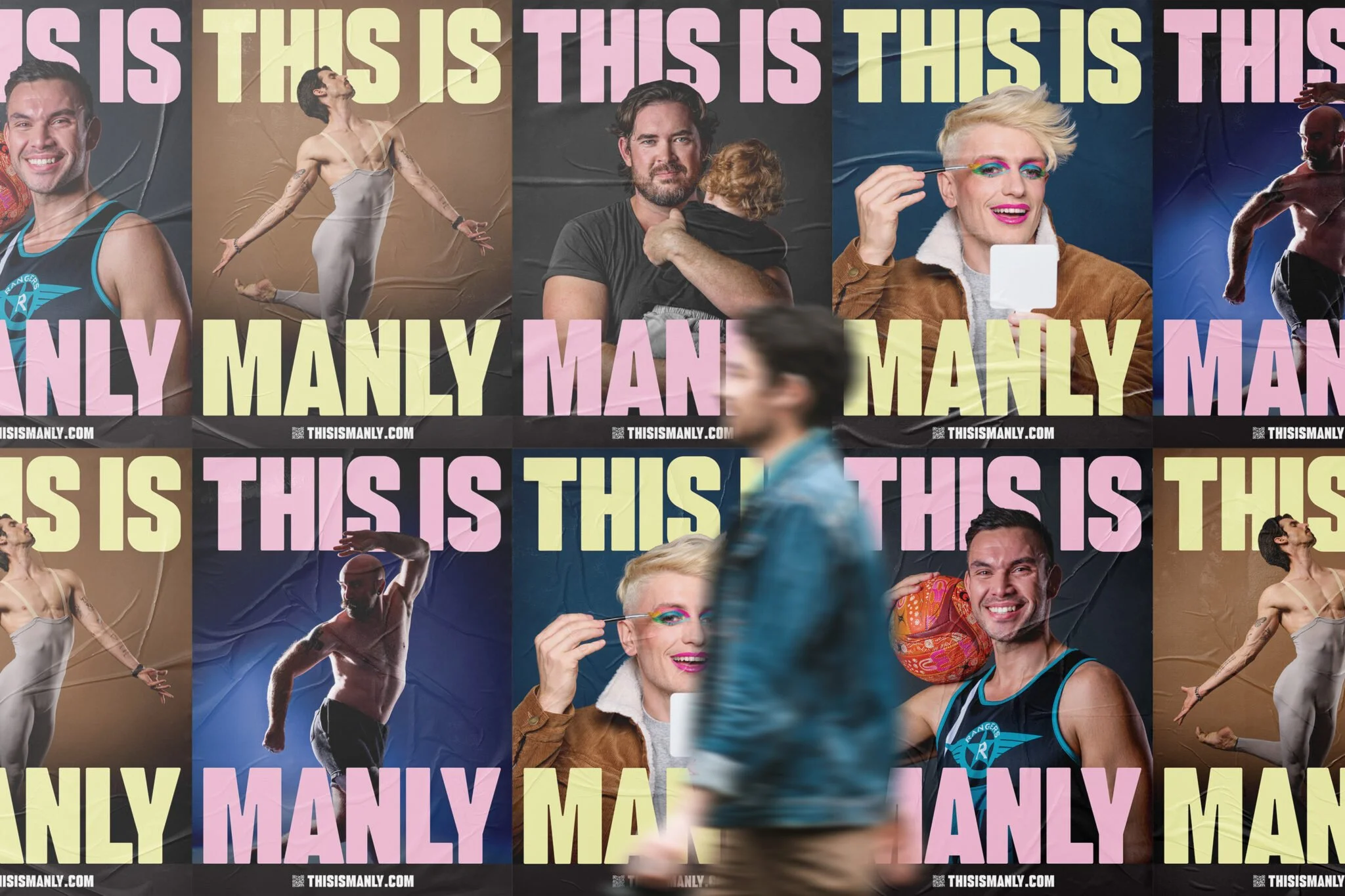
The point wasn't that any one behaviour was particularly radical. That was partly the point. We weren't trying to invent a new kind of man, but make visible the breadth that was already there.
That doesn't mean ignoring the harmful expressions of masculinity that prevention needs to challenge. Qualities such as strength, stoicism, or protectiveness aren't inherently harmful, but they can become so when expressed through control or dominance.
Nor does every prevention initiative need to approach the challenge in the same way. Some work must directly confront harmful attitudes and gender inequality. Other work can create space to explore identity, relationships, and different possibilities. These approaches can complement each other.
But a different story needs to feel authentic.
As This is Manly evolved, we realised that changing the story wasn't only about the messages we created. It was also about who people could see living that story already. It's one thing for a campaign to tell you that being emotionally open, caring, respectful, or vulnerable is compatible with masculinity. It's another to see someone you know, trust, or look up to actually doing it.
This became the idea behind the next evolution of This is Manly: This is an Influencer.
We started looking for everyday men who were already broadening the story of masculinity through the way they lived, worked and related to others. Often, they weren't consciously challenging gender norms or thinking of themselves as role models. They were simply making another possibility visible.
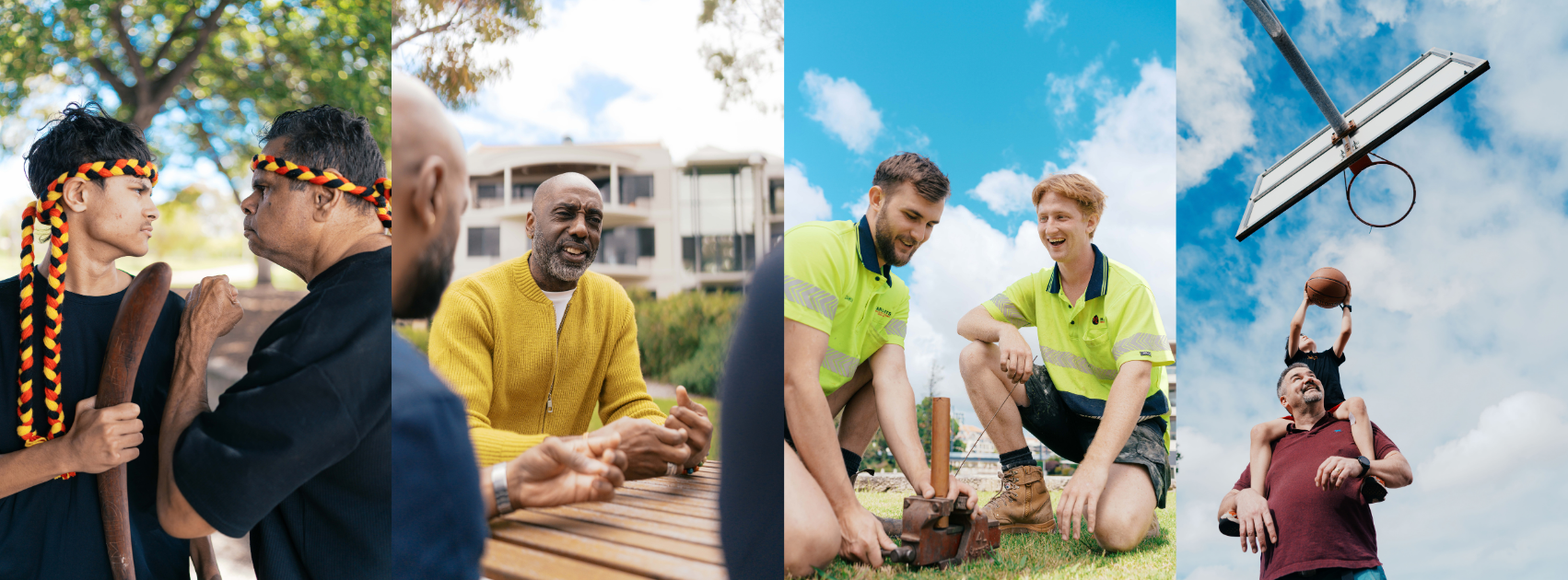
This mattered because one of the things we heard in our conversations with older and younger men alike was a sense of being caught somewhere in between.
Traditional masculinity can offer a remarkably clear script: be strong, be successful, provide, don't show weakness. For some of the men we spoke to, those rules no longer felt right, but what replaced them was less certain.
And that uncertainty asks more of people. Without one accepted script to follow, you have to reflect on your values, navigate competing expectations, decide what kind of man you want to be, and grapple with parts of yourself and the world around you that a simpler set of rules might allow you to avoid. There can be an uncomfortable space between rejecting an old story and having another one you can see yourself within.
That’s why our learning isn’t simply that prevention needs to tell more positive stories about men, it’s that we need to hold both: being honest about when the more rigid attitudes, expressions, and structures of gender cause harm, while making a much broader range of possibilities visible on the other side.
And those possibilities need to feel real. Not a perfect version of the "good man". Not another set of expectations men need to live up to. But ordinary people demonstrating, in ordinary moments, that masculinity can contain more than we sometimes allow it to.
Once we started looking at prevention this way, something else became obvious. We didn't necessarily need to create these role models from scratch. Many were already there, influencing the people around them every day.
That's where we'll go next: The men are already there. They just need some backing.
Project team
Emma Scott Senior Project Lead, Youth and Families
(Australia New Zealand)
Kaci Oliphant Project Lead (Australia New Zealand)
Rhett Corker Associate (Australia New Zealand)
Naomi West Project Officer (Australia New Zealand)