
Ehara te whai mana i te mahi takitahi: Agency is not a solo act
Te Wā Whakamutunga: Part 4
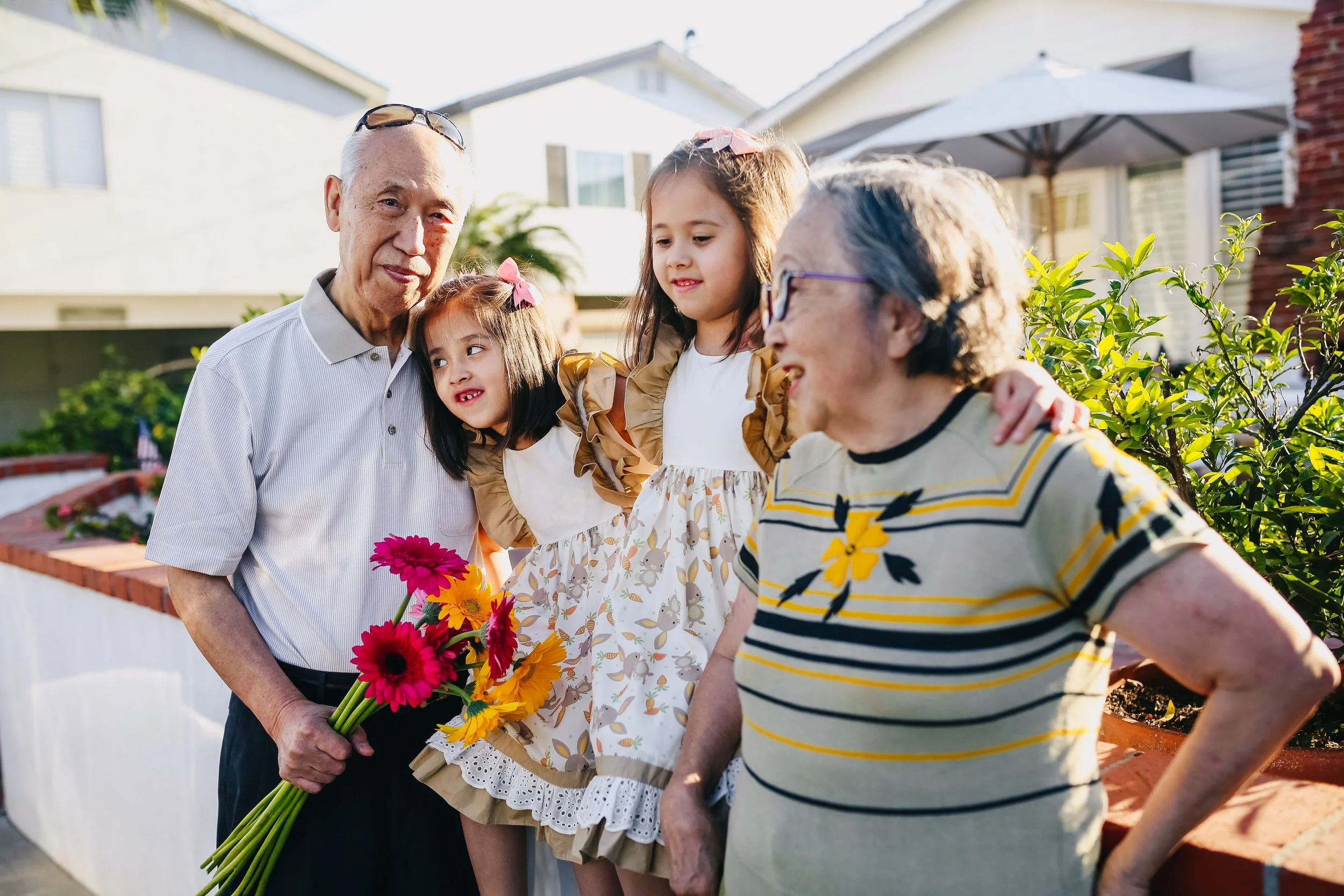
People do not stop being agents of their own lives because they become patients. Yet as illness progresses, more of life can become organised around appointments, medications, risk and the needs of the body. While they become dependent on others, that’s really not the same as a loss of agency.
A striking insight from our research was how fragile autonomy can become at the end of life, and how easily it can be overridden, even by people acting with good intentions. Across the stories we heard, agency was often caught between competing pressures: what someone wanted and what they were able to do, what felt right and what felt safe. It made us think about what it means to remain the author of your own life when so much is changing beyond your control. It also showed us how hard families and professionals were working in different ways to protect that sense of agency.
When we set out to understand agency at the end of life, we were asking about the person who was dying and what control looks like when the body is failing. As more families and professionals let us into their experiences, we noticed something unexpected. Agency at the end of life is rarely held by that one person alone. It is held, negotiated, and sometimes lost, between the person dying and the people standing beside them. And agency itself turned out to have two faces: taking charge, and staying normal. The first is about directing what happens next. The second is about still feeling like yourself while it happens. Both matter. Neither are possible alone.
This piece explores that in-between space, the agency we take on when we act in community, what it costs to honour a wish at the expense of comfort, and what happens when that wish leads a family somewhere none of them have been before.
The agency no one told them they had
It happened fast. One moment he was on the couch; the next he was on the floor, and the ambulance was already being called. The family knew that he wanted to stay in the life he still had left, at home. But the paramedic crew was already insisting, and the family member standing there felt there was no option but to comply.
“I was holding him, calming him, stroking him. The paramedics wanted to take him. I didn’t know how to override and say no, he’s staying here, let’s just make him comfortable. They didn’t offer to just soothe where he was. None of that.
I wish I’d asked him aloud what he wanted.”
No one realised, until much later, that there had been a choice to make. He didn’t have to go to the hospital. But he did.
This is agency too, or a lack of it, and it's the kind we talk about the least: the agency of the people standing beside the bed, making calls under pressure, often without discussing what the options even are. Families are constantly making decisions on someone else's behalf, in real time, with incomplete information, and often on the assumption that professionals must know best. In this case, they didn't. The person died in the A&E department, surrounded by beeping machines, fluorescent lights, and the mundane business of bins being emptied and replaced. The family did what they could:
“The environment in the hospital was awful, so I created a bubble and just sang to him. I sang some of our favourite songs - one grandson came and put on Van Morrison. That song, Into the Mystic. He died when we were playing Sweet Caroline. It was unreal for me.”
This family member's regret isn't about the decision itself. It's about not knowing there was a door she could have chosen not to walk through, so that her loved one's agency could prevail.
Family members know the dying person best, better than any professional. When they act on that knowledge, they're not overriding the dying person's agency. They're the ones best placed to carry it out. A wish to die at home isn't fulfilled by the wish alone. It's fulfilled by many small moments, knowing there's a choice, and knowing you're allowed to make it.
Agency, it turns out, depends on knowing options exist. And that's how a family honours the dying person's agency: not by asking what they want once, but by being equipped, in each small moment, to act on it, when their person can’t themselves.
The tension between agency and comfort
Respecting someone's agency is not the same as making their life easier. This is where things get uncomfortable.
Consider a man who built an illustrious career and was, by every account, strong, successful and fiercely independent. Now, at the end of his life, he refuses help. He refuses pain relief. He refuses intervention. He refuses to be managed. He dies slowly, in pain, surrounded by strangers, in a rest home he never wanted to be in. His child watches, desperate to step in, finding it almost unbearable to witness. His doctor, who has known him for more than forty years, holds the line, respecting his wishes while continuing to offer whatever community support might help. Everyone is doing what they believe is right. And yet, somehow, it still feels wrong.
Research by Houska and Loučka (2019) on autonomy at the end of life offers a useful distinction here, the same distinction we kept meeting in our own data. Autonomy is not only about "taking charge": making decisions, refusing treatment, directing what happens next. It is also about "being normal": continuing to feel like yourself, maintaining ordinary life, relationships, and a sense of dignity. Most of the time these two dimensions travel together. But when illness forces them apart, whose version of autonomy takes precedence, the one that insists on control, or the one that just wants to simply feel like themself again?
We saw this tension play out around medication too. One daughter told us about her mother, who was prescribed antidepressants for the first time in her life, and simply would not take them. In her daughter's words, she was "playing Russian roulette" with the heart medication keeping her alive too. Clinically, this might be understood as non-adherence. But it might also represent one of the last places where the choice is still hers. Taking charge, at the cost of staying well.
As her daughter watched her mother navigate an increasingly complex and fragmented system, she reflected:
“We constantly marvel that as a society we are so utterly shit and unprepared for it [the dying process].”
That observation captures something important. At the end of life, autonomy can become difficult precisely because the things professionals, families and systems see as helpful may not be a priority for the person dying.
Honouring someone's wishes can mean standing by while they suffer. That is not a comfortable position to occupy. But overriding those wishes because we cannot bear to watch can also cause harm. It can take away one of the few forms of agency a person still has. Yet there is a paradox here: by honouring the choice, we may sometimes move further away from the kind of dying the person actually wanted. There is no clean answer. The challenge is to hold both truths at once: the person’s right to take charge of what happens, and their wish to remain comfortable, connected and themselves, even when those two things pull in opposite directions.
The tension between honouring a wish and breaking new ground
A different kind of tension appears when the wish itself is unfamiliar, when a family is asked to support something they've never had to navigate before. Assisted Dying (AD) is still new in Aotearoa, and the people choosing it are often doing so with almost no one walking beside them. Hospice, for reasons rooted in its own philosophy, doesn't always sit comfortably alongside the ethos of AD and will come and go throughout the dying process. So families who want to honour a loved one's choice can find themselves learning the process as they go, without the scaffolding that usually surrounds a death.
In our research, AD stood out as something close to a teacher. It places agency on centre stage: the person makes an explicit, documented decision about how and when their life will end - this is agency in its purest "taking charge" form. But that decision only becomes real if the people and systems around it are willing and able to support it.
“I’ve got to keep going, but I’m just not sure how this playbook works. It was a lonely time. I kept asking myself, how am I going to have this be what she wants?”
Our research found that the decision to go ahead with AD is never made in isolation. It's relational, situational, embodied, shaped by family wishes, providers' capacity, physical changes, and uncertainty. It is agency exercised within circumstances, not above them, and it is being normal and taking charge all at once: a person trying to die on their own terms, inside a body and a system that won't entirely cooperate.
That's just as true for the families supporting an AD death as it is for the person choosing it. They are exercising agency too, often for the first time, often without guidance, simply by choosing to stand beside someone through something new. In this sense, AD doesn't just reveal one person's agency, it reveals the whole surrounding cast, whose willingness to walk into unfamiliar territory is what turns a legal right into a lived one.
Portable agency, rooted in community
Agency itself is meant to be movable; a person can change their mind, get better, ask for something different, and have that choice travel with them. A specialist in our study described watching people who unexpectedly stabilise, move back out into their communities:
“They might have a time when they’re better than expected, and they need support to face outward back to their community…or sometimes they leave our service entirely. That transitioning back out, that was unexpected! They just created their future here, their community here and their people here. Then suddenly they are no longer in our role. That’s really hard.”
That phrase, "created their future”, points to something built slowly, out of trust and repetition and shared hardship, in a particular place, with particular people, over time. It cannot simply be reassembled elsewhere on short notice. So when specialist end-of-life carers deregister someone because they've unexpectedly stabilised or been cured, the system treats this as restoring their agency, handing the choice back to a person who no longer needs help exercising it.
But what actually gets taken away is the community that made the agency possible: the place they belonged, the people who knew their door was open, suddenly gets slammed shut. Leaving a service can hand back the right to take charge. But it can't hand back belonging, the sense of being known and supported that made taking charge feel safe in the first place. That doesn't travel nearly as easily.
What agency actually looks like
Put these themes side-by-side and a pattern emerges. Agency at the end of life is almost never a single, clean act of self-determination. It's a dying person expressing their living wishes in death. It's a family member making a snap decision without knowing they had options. It's a daughter standing back while her father suffers, because that is essentially what he asked for. It's a whānau learning an unfamiliar process because it's what their person wanted. It’s clinical professionals giving both belonging and hope, and then taking it away all at once.
None of these people were exercising agency alone. They were exercising it with someone, for someone, because of someone, with a bigger goal in mind: to show love.
Agency at the end of life doesn't belong to an individual in isolation. It belongs to the relationships around them. The deeper finding is that people need more than the right to choose. They need somewhere to belong, someone to hold the choice with them, and the support to remain in charge while still feeling like themselves.
Agency isn't a private act of will. It's something people build together, in community: family who know there's a door before it's too late to open it; clinicians willing to sit inside the discomfort rather than resolve it too quickly; and systems designed to support families as they find their way, rather than requiring them to fight their way through the gaps. AD showed us this most clearly, because it strips agency down to its legal essentials and then shows you everything else that still has to be built around it before that legal right becomes something a person can actually exercise.
If we want people to have real agency at the end of life, we have to build a community capable of holding that choice, so our loved ones can remain authors of their own lives, right to the end.