
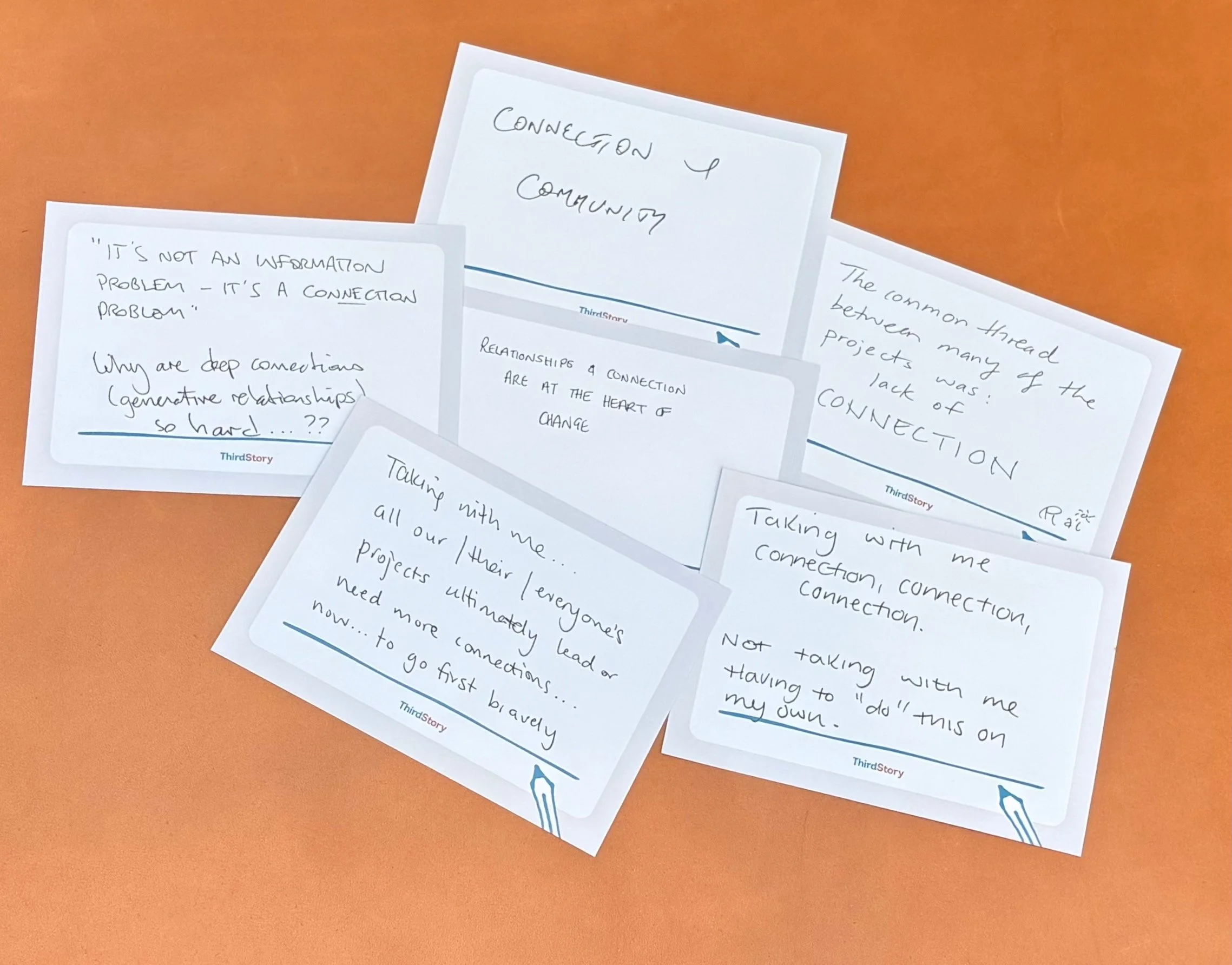
SoDA showcase audience reflection cards
Eight projects, one cohort, and the lessons that surfaced again and again at this year’s Social Design Academy Australia Showcase.
The work behind the showcase
Every year, the Social Design Academy (SoDA) ends the same way: with a room full of people sharing what eight months of real-world project work has taught them. This year's Project Showcase brought together teams from the community organisations and state government, working on a diverse set of priority projects for their organisation or community.
When we look across the projects we see three shifts:
Our work is often organised by sector or need, but connection and belonging turn up wherever we look
The problem you start with is rarely the one you solve (and this is the secret to innovation)
You’ll only be able to reframe the problem if you really listen, and make sense of what you hear.
1. Our work is often organised by sector or need, but connection and belonging turn up wherever we look
Our systems tend to organise people by their need: food insecurity, mental health, aged care. Again and again this year, teams found that beneath the label sat something more fundamental. People needed connection.
Wajma Padshah from Mission Australia made this vivid with a story of two mothers. Both are single parents with young children, both speak English as a second language, and both find themselves without staples for dinner. Mother A lives in Indonesia. On paper she has little material wealth, but she can ask her neighbours without shame and walk to a low-cost community garden where her children play with others. Mother B lives in the City of Gosnells, in one of the wealthiest states in the world. She is isolated from her neighbours, has no mobile data to check service hours, and faces a long public transport trip to a service that may not be open. Her last option is to ask her children's school, with all the shame that carries.
The difference between them was not food. It was connection. As Wajma put it, the current approach is "a crisis model that relieves hunger for a day, but keeps repeating."
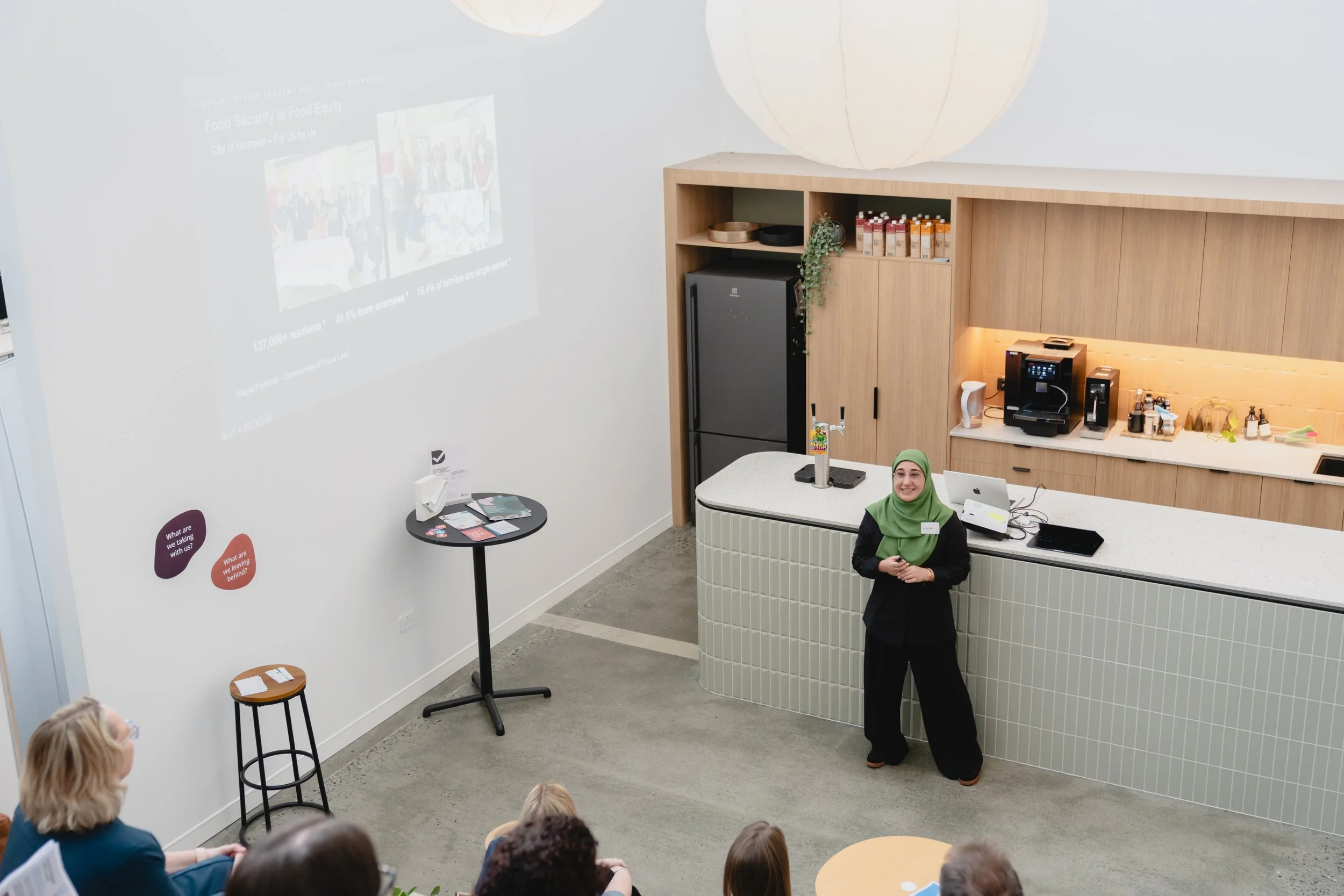
Wajma Padshah of Mission Australia presenting her project at the SoDA showcase 2026
Chorus reached a similar conclusion in supporting older adults living independently at home. Support workers’ days are quickly taken up with paperwork, medical appointments and domestic tasks, leaving little time to help customers build social connections. The team found that the default service response wasn’t the answer: “Social connection doesn’t always need a referral code or a formal service.”
Instead, they recognised that lasting connection exists within the local community: libraries, neighbourhood groups and peers, connections that can outlast any aged care package. Their prototype, Connect and Go, sits inside the digital tools frontline staff already use. It helps them discover what’s happening locally, match customers with others who share their interests, and, in a later stage, arrange transport so customers can get there. As the team noted, connection is both personal and practical: the right activity, the right people, and a way to get there all matter.
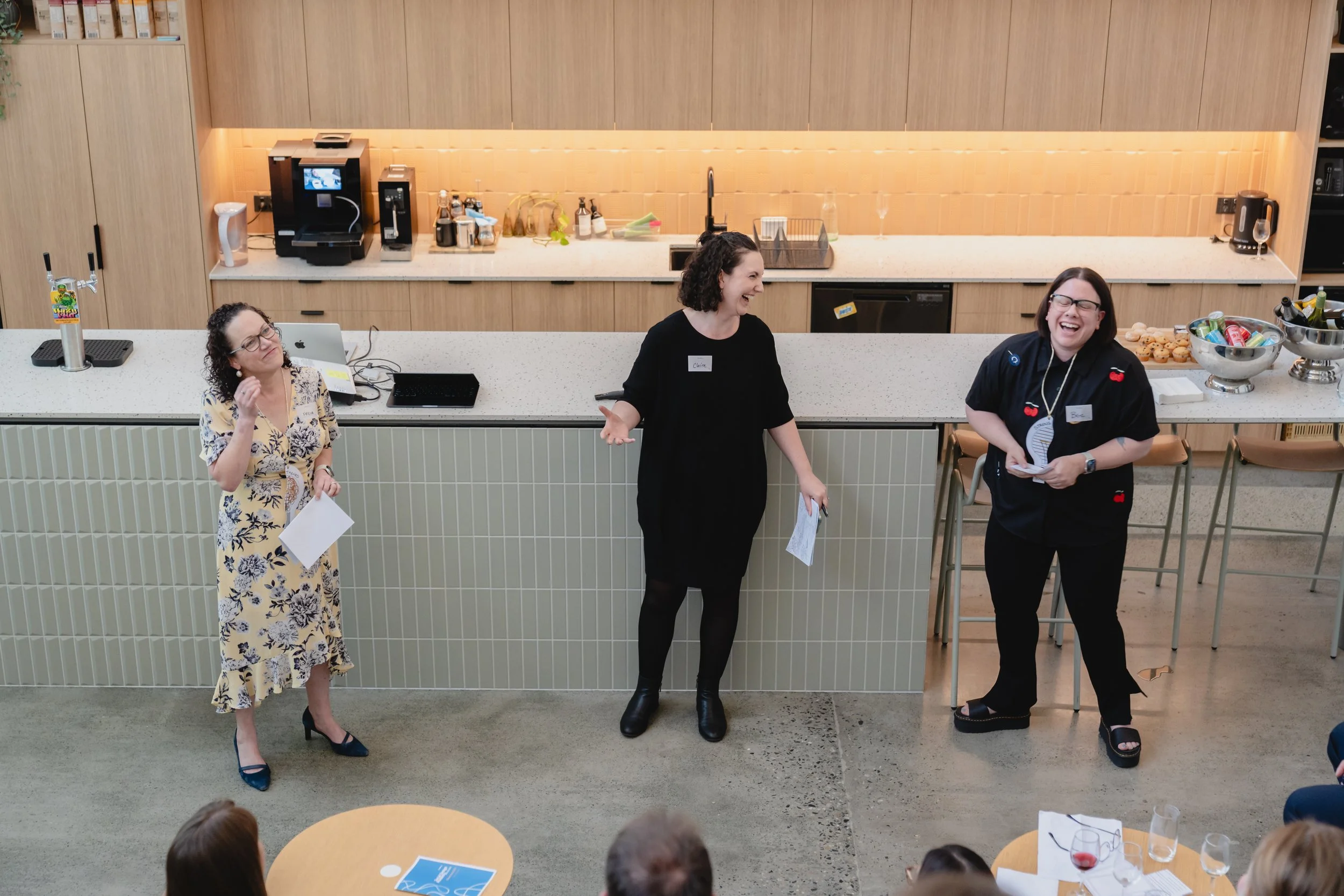
Richmind WA’s Freya Barr and Bec Vraptisis with SoDA facilitator and coach Claire Dodd (centre)
2. The problem you start with is rarely the one you solve (and this is the secret to innovation)
Almost every team arrived at SoDA with a clear problem in mind. Almost every team left having reframed it. We’d argue that this is the secret to innovation. Innovative solutions come because someone surfaced an unmet need, or a new way of looking at the problem, and that new frame demands a different solution. This is the design process doing its job.
Richmind WA’s team experienced this first-hand. They began with a question about how to make sure carers of people with mental health challenges were better informed. The original plan was to produce a clear, consolidated information resource.
To understand carers’ experiences, the team created a persona, “Karen”, drawn from many carers’ stories. Karen works full time while supporting her family. She navigates housing, the NDIS, health and justice services, each with its own front door. She retells difficult parts of her story again and again because no single service holds the full picture, and confidentiality conversations focus on what can’t be shared rather than on how she can contribute. As the team put it: “The system makes her fit into categories… When we design for the average, we design for nobody.”
Through the interviews and sense-making process, the team realised that information wasn’t the core problem. What they kept hearing was isolation: carers standing outside the circle, unknown and unrecognised. That reframe changed the solution. After testing early ideas with a family reference group, the team moved from delivering information resources to designing a Carer Connection Model, with a secure, individualised online portal as the stretch goal. It gives carers one clear front door, records and recognises their role, and makes consent understandable and adjustable as circumstances change.
3. You’ll only be able to reframe the problem if you really listen, and make sense of what you hear
None of these reframes happened at a desk. They came from listening to the people who use, deliver and shape services. Just as important, they came from turning what teams heard into insights they could act on.
Parkerville Children and Youth Care set the bar this year. With support from WA Police and other place-based organisations, the team travelled to four regions, including the South West, Pilbara and Kimberley, and spoke with more than 150 people: government and community organisations, practitioners, and families with lived experience. Working with a deeply sensitive topic, they used visual prompts, hands-on materials and creative activities so people could contribute in ways that felt safe.
They came home with what one team member called a bucket load of data, and it felt overwhelming. As the Parkerville team reflected, SoDA's synthesis tools helped them distil it into six core insights led by a powerful systems critique:
"Procedure alone is not enough. A system can follow procedure and still leave the child and family unsupported. Investigation is not recovery. A referral is not necessarily being held."
They also reframed where responsibility lies. Too often, systems rely on children to recognise abuse and find a safe adult. The team argued that this burden must rest with adults and institutions.
St Bart's shows that listening well doesn't always require a large-scale consultation. The team conducted a survey and some conversations with consumers across homelessness, mental health, aged care and community housing, and spoke with staff as well. Through thematic analysis, the St Bart’s team surfaced a clear message:
"Relationships matter. Consumers are more likely to engage when they feel safe, respected, and genuinely listened to."
That became three design principles: keep it intimate, keep it relevant, and commit to follow through. The last one is a lesson for every organisation that asks for feedback. Consumers want to know what happened to their input, even when the answer is that an idea couldn't be implemented.
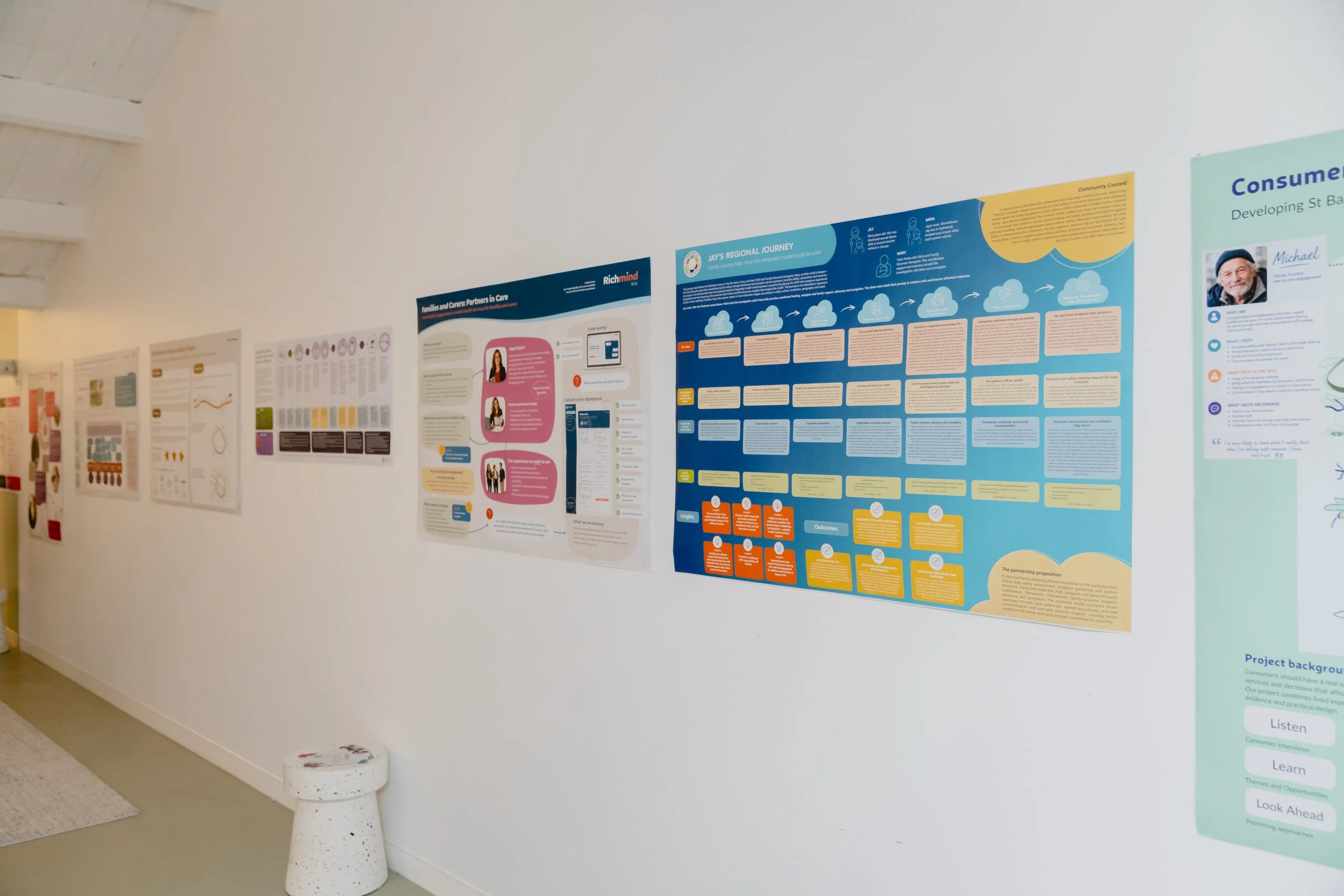
Project posters on display at the SoDA showcase
The real test starts tomorrow
Closing the evening, ThirdStory CEO Keren Caple reflected on why SoDA brings together a diverse range of people from across government, not-for-profits and other for-purpose organisations. The work of systems change is hard and can be lonely, and the problems we face "don't need more people thinking the same."
Most of all, she reminded everyone that the showcase is a beginning, not an end:
"The real test of SoDA is what you do tomorrow, and next Friday, and every Friday from now on."
That is the heart of SoDA: building design capability where it is needed most, with the people closest to the work. Congratulations to the 2026 cohort, and thank you to every organisation that backed its people to take part.
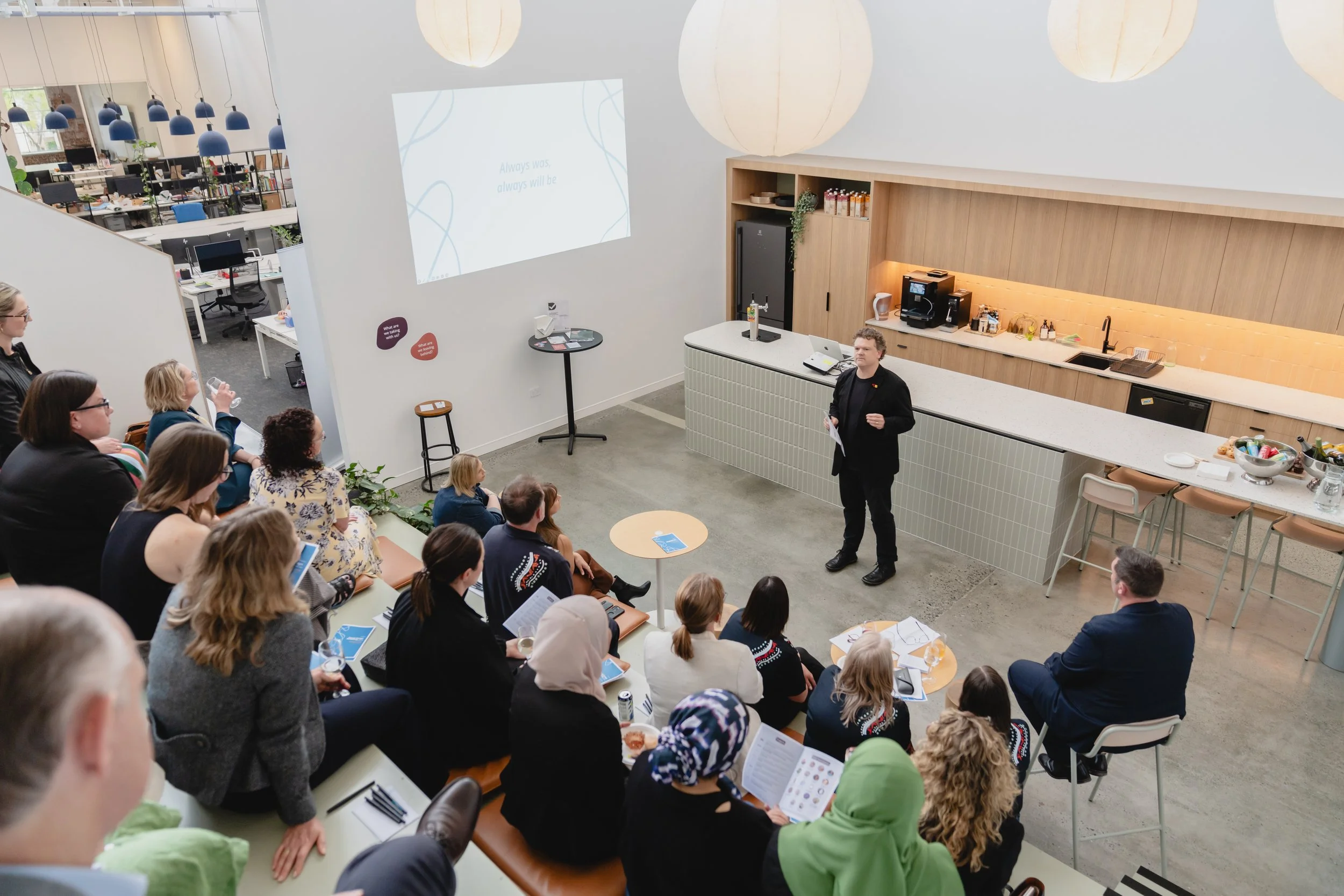
ThirdStory Director and SoDA facilitator and coach, Jethro Sercombe at the SoDA showcase
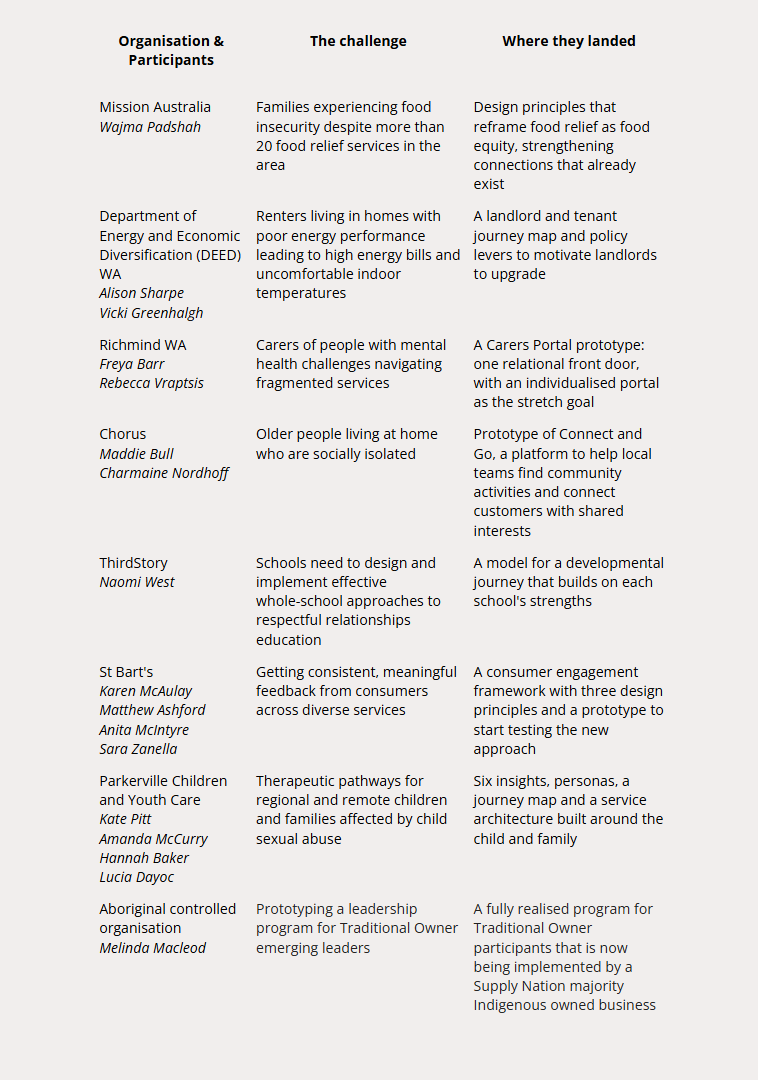
The 2026 cohort at a glance
Read more about the Social Design Academy and apply here
Project team
Jethro Sercombe Director, Innovation Practice
Claire Dodd Senior Project Lead
Naomi West Project Officer