
The Manly Series 1 of 5: We started with a campaign. Three years later, here’s what we’ve learned.
Three years of This is Manly have taken us from a youth-led campaign about masculinity to a much bigger question: what does it actually take to help everyday men recognise their influence and use it to create change?
Mel O’Nell-King owns Athlete X, a gym in Bibra Lake. Athlete X is more than somewhere people train. Mel’s wife runs the cafe at the front, and his sister runs AX Pilates on the top floor. It’s the kind of place where people come to connect, spend time, and feel part of a community.
Like a lot of people we’ve met through This is Manly, Mel didn’t come to this work as a primary prevention practitioner. He came to it as someone who cares about the people around him. Mel wants to create a community, and understands that, as a gym owner and trainer, what he says and does carries weight.
As part of The Manly Movement, Mel developed Pre-season (with some background support from our team). A program designed to bring together conversations in the different domains of our personal life - time, money, relationships, and physical and mental health, into a setting where men already felt comfortable and connected.
It’s a small story from three years of This is Manly, but it captures something that has fundamentally changed how we think about engaging men in prevention.
Because we didn't need Mel to become a primary prevention practitioner. The influence was already there. Our job was to help create the conditions around it.
How do we make prevention feel close, relevant, and doable for men?
Primary prevention asks us to address the underlying gendered norms and structures that drive violence against women. But the language and systems surrounding that work can feel a long way from how many men understand their own lives.
When we started This is Manly in 2023, we began with young people and that question. Rather than developing a campaign for them, we co-designed it with them: exploring masculinity, the pressures and expectations attached to it, and the kinds of messages, language and imagery that might genuinely invite them into the conversation.
The result was a youth-led campaign that used humour, familiar language, imagery and cultural references to open up different conversations about what it means to be “manly”. It helped make a complex issue feel more familiar and gave young men a way into the conversation without prescribing a single “right” way to be a man.
But as we listened, tested and learned, something bigger started to emerge.
Again and again, influence led us back to people close by: dads, uncles, siblings, grandparents, coaches, teachers, mates, colleagues, and community leaders.
People like Mel.
What helps men recognise and use the influence they already have?
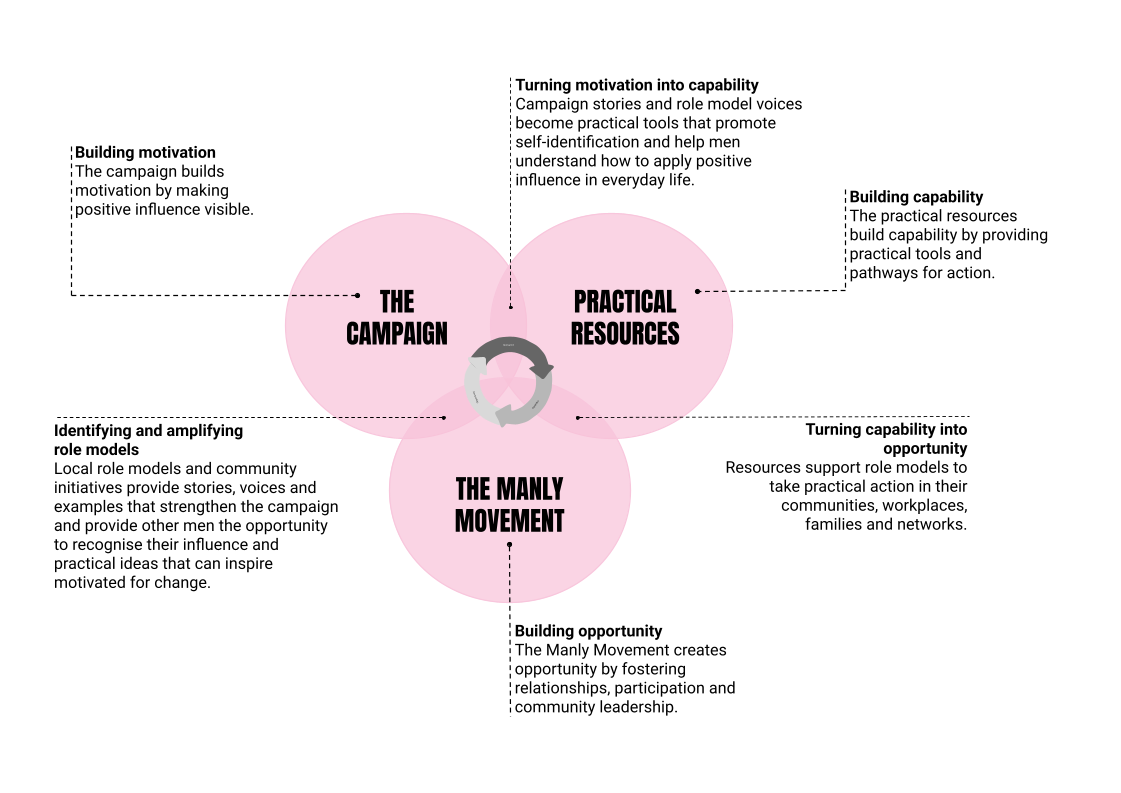
We began thinking less about how to get a prevention message to men, and more about what helps men recognise and use the influence they already have. COM-B gave us a useful framework for thinking about what needed to sit around that influence for it to translate into action.
The COM-B model tells us that for a behaviour to happen, three things need to come together: Motivation - a reason to care and a sense that the behaviour fits with who you are; Capability - the knowledge, confidence and practical tools to act; and Opportunity - the relationships, environments and moments that make action possible.
That’s the way that This is Manly has evolved; from a campaign into a three-stream program model.
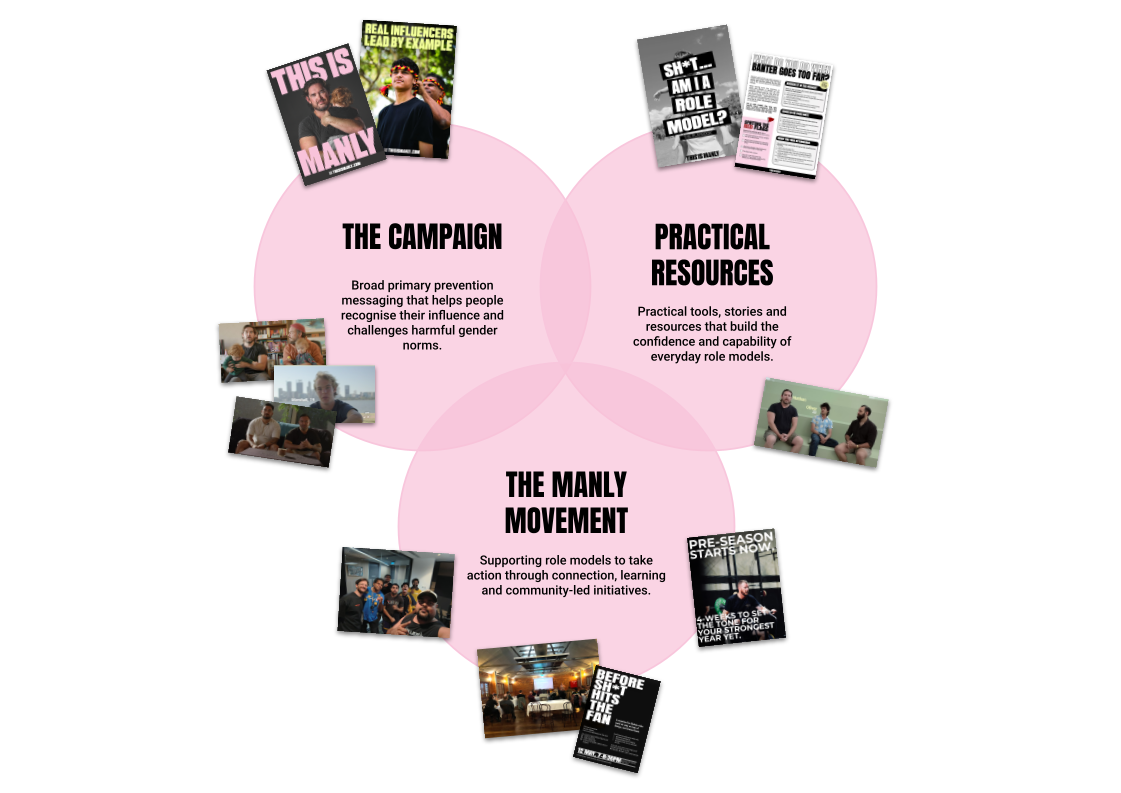
We explored everyday role modelling as a way to build motivation, helping men recognise the influence they already have and see a meaningful role for themselves in prevention. We developed practical resources to build capability, giving people the knowledge, confidence and tools to act on that influence. And through initiatives like Pre-season in The Manly Movement, we created opportunities to put those ideas into practice in the relationships and settings that already mattered to men.
Over time, these three conditions became an important thread through how we designed, tested and evolved This is Manly.
Three years later, we're asking bigger questions.
Three years of testing, learning, and evolving This is Manly has taught us a lot about what helps men engage in prevention - what draws people in, what helps them recognise the influence they already have, and what makes it easier to turn good intentions into action:
We need to build different stories about men and masculinity. Prevention needs to be clear about the attitudes, behaviours and norms that cause harm, while also making healthier and more expansive ways of being a man visible. Men need something meaningful and achievable to move towards, not only something to move away from.
The men we need are often already there, but they need some backing. Dads, coaches, mates, colleagues, teachers and community leaders are already influencing the people around them. They don't necessarily need to become prevention practitioners; they need help to recognise the influence they already have, and the information, confidence and support to use it well.
Information needs to make action easier. Awareness and good intentions only get us so far. People need practical, accessible information that meets them where they are, and helps them know what to say, what to do and how to respond in the everyday moments where influence happens.
Prevention becomes more powerful when these things come together in place. The people, relationships and settings that shape gender norms already exist within communities. We're increasingly interested in what happens when motivation, capability and opportunity are reinforced across those existing networks, and when communities have the capability to own and sustain that work themselves.
There’s much more behind each of these learnings than we can fit into one blog. So, over the next few weeks, we’ll be sharing more about what three years of This is Manly has taught us, what we know now that we didn't know when we started, and what those lessons mean for where the work goes next.
Project team
Emma Scott Senior Project Lead, Youth and Families
(Australia New Zealand)
Kaci Oliphant Project Lead (Australia New Zealand)
Naomi West Project Officer (Australia New Zealand)