

Transforming fragmented domestic and family violence responses into connected, place-based learning networks across Australia.
Across Australia, the services that support people experiencing domestic and family violence (DFV) face a range of systemic challenges in meeting the needs of help-seekers. Services often work in isolated silos as a result of funding structures that don’t recognise the complexity of people’s needs, and short-term funding models make it difficult for services to attract and retain staff. The DFV sector’s systems and structures are not set up to enable the delivery of holistic, long-term care that help-seekers desperately need.
This fragmented setup particularly affects First Nations families, Culturally and Linguistically Diverse (CALD) communities, pregnant women, single mums and young people. Operating on their own, even the best services struggle to shift the structural conditions holding disadvantage in place. Insights from the learning network we facilitated through Paul Ramsay Foundation’s 2023 DFV Special Cohorts Grant Round make one thing clear: we need to shift from isolated service models to long-term, place-based approaches that offer families genuine safety, stability, and healing.
Paul Ramsay Foundation listened intently to the challenges that services are facing, and in late 2025 established a grant round to invest in the collaborative endeavours of services working together to better meet the needs of those they support. Its Strengthening Family-Centred Collaborations Grant Round has provided grants of up to $600,000 over three years for 17 collaborations in Queensland, Northern Territory and Western Australia - with 58 organisations involved in total - to grow and learn from their collaborative practice.
ThirdStory and Aboriginal engagement consultancy Kaarla Baabpa are the grant round’s convenors, bringing together collaborations in different configurations and spaces throughout the three year grant round to facilitate shared learning and new insight about what collaborative arrangements need in order to make a positive impact on families and communities. We are joined by Nous Group, the grant round’s evaluator, and Shape Agency, its government relations partner. Together our goal is to ensure that insights and ideas from those closest to the challenge are able to reach decision-makers and influence policy and funding.
“We know that repeated patterns of violence have cumulative, intergenerational effects. Long-term, trauma-informed approaches are critical to support effective recovery. Together, we can learn so much from each other.”
Backing local community authority
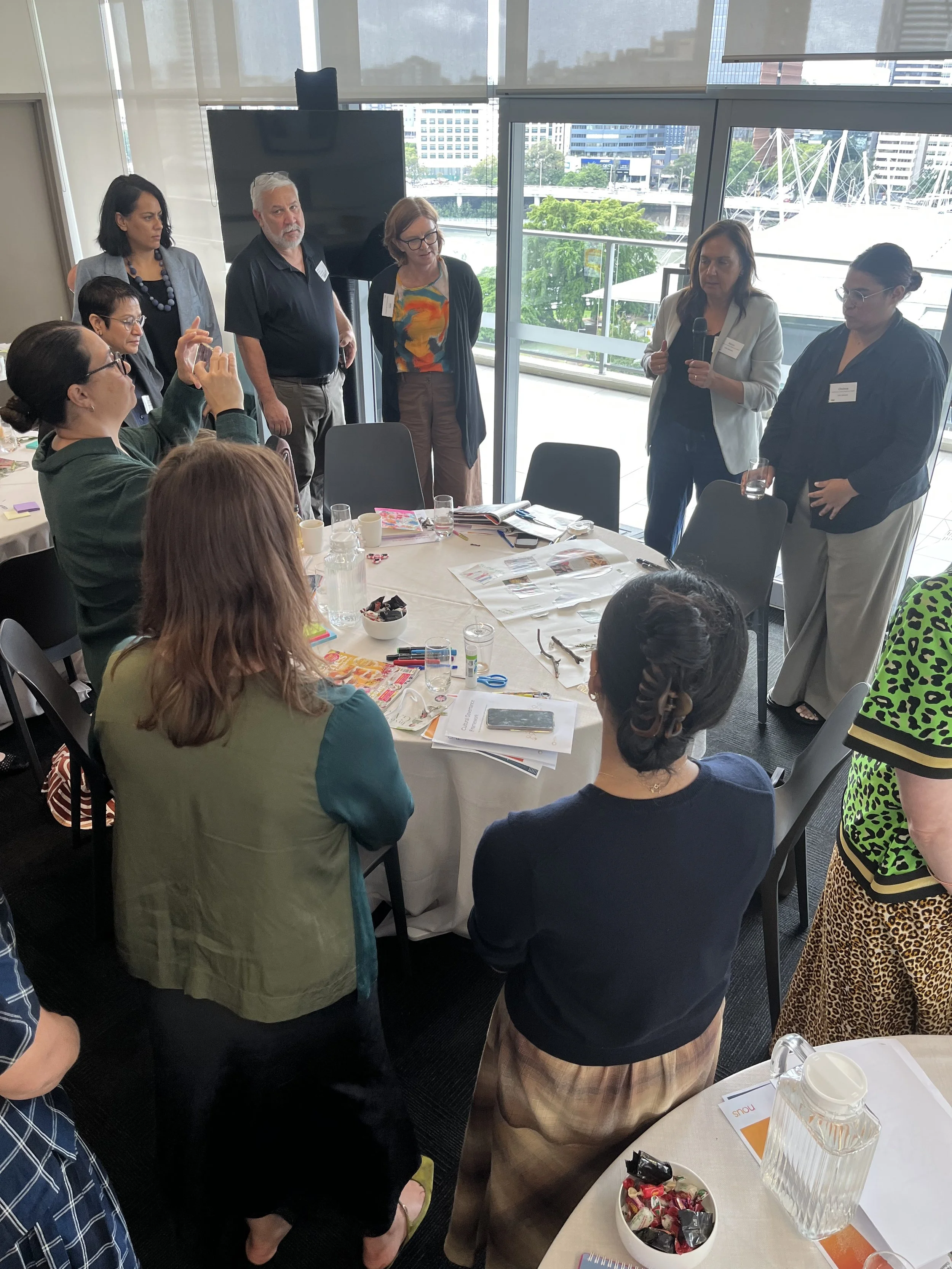
During the grant round’s first year, ThirdStory and Kaarla Baabpa have been facilitating culturally safe spaces for relationship-building, learning and collaboration. Through a series of online meetups organised around key cohorts of help-seekers, and in-person regional meetups in state capitals, the program has been laying the foundations for a system that treats relationships and trust as core learning infrastructure. Together, we are learning about what programs and practices are making a difference for each cohort and in each place, and exploring what structural or mindset shifts may be required to enable collaborations built around the needs of cohorts and communities to flourish.
Bridging community wisdom
This initiative acts as an active learning engine to shape policy and practice nationwide. Working with evaluation partners Nous Group and government relations experts The Shape Agency, we are gathering real-world evidence about what makes genuine, sustainable collaboration work in the FDV field and will be sharing findings as the grant round progresses.
Collaboration takes time, trust and dedicated infrastructure. So far it is evident that current resourcing arrangements are insufficient to support the kind of holistic, wraparound support that many help-seekers need, and pressures in other social sectors (such as housing) are limiting the effectiveness of the support that services can provide.
We have also observed that the field is learning faster than funding systems are adapting: there is a wealth of knowledge that is often trapped within small specialist and place-based services because they cannot unlock funding to codify, evaluate and share their practice, and professionals are looking for guidance on their practice from international sources because local insight is so hard to surface.
Project team
Emma Scott Senior Project Lead (Australia New Zealand)
Tally Daphu Senior Project Lead (Australia New Zealand)